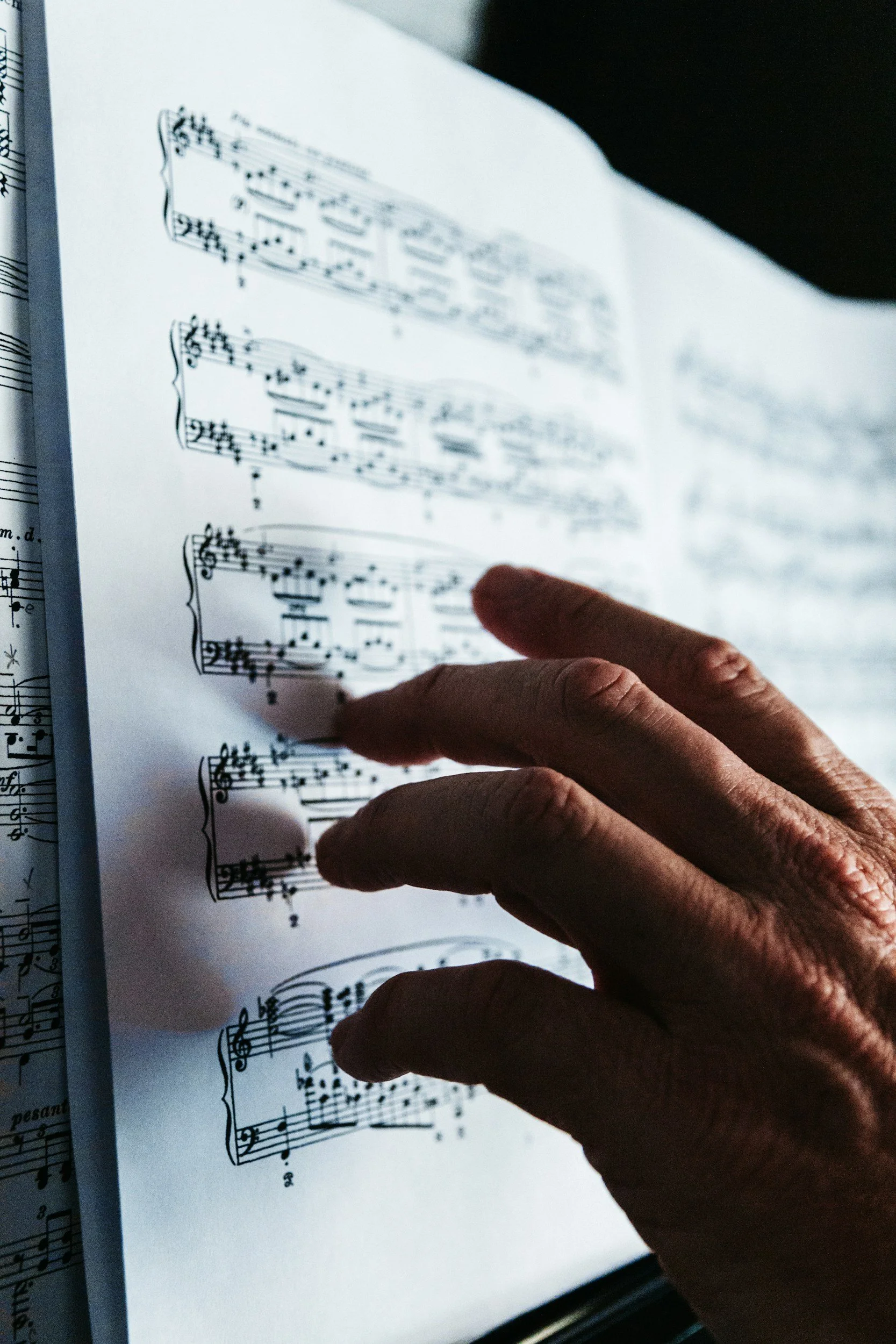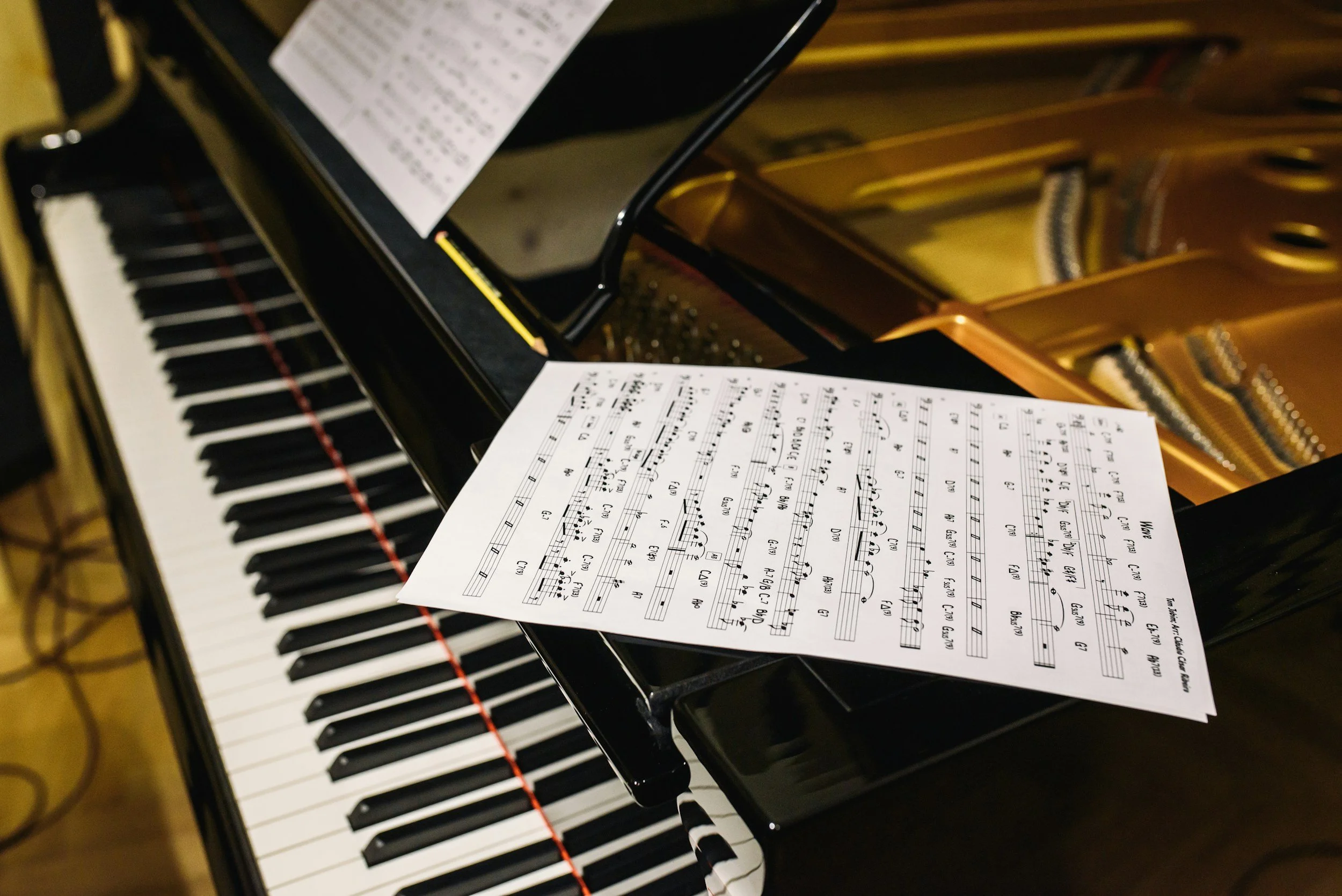
There's a particular kind of adult piano student we meet again and again. Maybe they learned as a child, got to Grade 3 or 4, and then life happened — exams, university, a career, a family — and the piano lid quietly closed. Or maybe they never learned at all, but always meant to, and now finally have an evening free to sit down and try. Either way, when they come back to the instrument, they come back short on time and long on good taste. They don't have hours a day to practise. They don't want to fight their way through "Mary Had a Little Lamb" to get there. And they certainly don't want a method book that treats them like a seven-year-old.
This is, in our experience, the single biggest problem with beginner piano repertoire: so much of it is written for children, and simply relabelled "for adults" with a change of cover art. An adult returning to the piano after decades away still has an adult's ear. They've listened to Einaudi, Ólafur Arnalds, Chopin, Debussy, Nils Frahm, maybe even Radiohead or Bill Evans — and they want music that sounds like that, even if their fingers are still finding their way around a five-finger position. Give them thin, condescending tunes and they'll lose interest within a fortnight. Give them something beautiful that they can realistically play within a week, and they'll stay at the piano for years.
With that in mind, here are the ten books we'd point any returning or brand-new adult learner towards — chosen because, time and again, reviewers describe exactly this feeling: relief that the music sounds "grown up," that it's calming rather than childish, and that it gives them a reason to sit down after a long day rather than one more thing to dread.
1. Relaxing Piano — Piano Hive
We'll declare our hand early: this is one of ours, and we'd be doing readers a disservice if we left it off a list like this, because it was written to solve precisely the problem above. Fifteen original pieces for the later beginner up to Grade 1/2, influenced by Einaudi, Alexis Ffrench, Ólafur Arnalds and Nils Frahm — music that's "clearly laid out, very readable" but never dumbed down. One reader summed up exactly the audience we had in mind: "This book is amazing. Not complicated but sounds fantastic. It's inspired me to play again! I've been away from the piano for 35 years. This is a game changer." That's the whole idea — a book you reach for to unwind, not to grind through.
2. Peaceful Piano — Piano Hive
The bigger sibling to Relaxing Piano: 35 pieces spanning late beginner through to intermediate, drawn from our Relaxing Piano and Cinematic Piano collections plus material from our Grade 1 and Grade 2 books. It's the one we recommend to adults who've found Relaxing Piano too short-lived and want a whole shelf's worth of repertoire in one volume, still with the practice tips, glossary and manuscript pages that make self-teaching realistic. As one reviewer in Music Teacher magazine put it, this is music that gives developing players "a safe space" to build confidence, away from exam-angst repertoire, while still delivering "sophisticated rhythmic demands" — syncopation, the freedom of jazz, real musical substance.
3. Grade 1 Pieces for Piano — Piano Hive
For the adult who wants structure without losing the relaxing quality of the other two, this compilation pulls five pieces each from Relaxing Piano, Cinematic Piano and Peaceful Christmas, plus five brand-new compositions — twenty pieces in total, calibrated to genuine Grade 1 requirements (ABRSM, Trinity, LCM, Rockschool) but written to be "a welcome break from your exam pieces," not another slog. It's ideal if you want the reassurance of a recognised grade standard alongside music you'll actually want to play twice.
4. Play It Again: Piano Book 1 — Melanie Spanswick
This one is built from the ground up for the returning adult, spanning roughly UK Grades 1–4. Rather than newly composed teaching pieces, Spanswick uses real repertoire — Purcell, Mozart, Tchaikovsky, Joplin, Satie — each paired with two pages of practice tips addressing exactly the things that atrophy during a long break: touch, rhythm, hand independence, sight-reading confidence. It's the pick for someone who wants to feel they're playing "proper" music from day one back at the keyboard, with guidance that assumes intelligence rather than starting from zero.
5. I Used to Play Piano – Refresher Course — E. L. Lancaster & Victoria McArthur
The title says it all, and reviewers consistently confirm it delivers: a diagnostic quiz points you to the right starting unit, then eleven graded units mix classical arrangements, jazz, blues, ragtime and popular styles so you're never stuck doing dry technical drills for long. One reviewer called it "a great supplement to other adult piano methods because the selection of repertoire is wonderful" — which is exactly the point. It's designed to get a rusty adult player back up to speed efficiently, without wasting the little practice time they have on material aimed at children.
6. Ludovico Einaudi: Graded Pieces for Piano – Preparatory to Grade 2
Given how often Einaudi's name comes up as the reference point for what adult learners actually want to sound like, this official collection deserves its place. Twenty of his most-loved pieces, arranged to match early exam-board standards, each preceded by short companion exercises targeting the specific technique it needs. Crucially, the arrangements retain the emotional character of the originals rather than stripping them down into something generic — so from the very first pieces you're playing music that sounds unmistakably like Einaudi, not an exercise wearing his name.
7. Ludovico Einaudi: Graded Pieces for Piano – Grades 3–5
The natural next step once the preparatory volume is under your fingers, this edition — with a preface written by Einaudi himself — brings twenty further pieces matched to Grade 3–5 criteria for intermediate players. It's a good marker of where "adult beginner" repertoire should be heading: contemporary, harmonically rich, unmistakably real music, rather than a march through increasingly complex but characterless studies.
8. Adult Piano Adventures: All-in-One Course – Book 1 — Nancy & Randall Faber
If you're starting completely from scratch rather than returning to old skills, this is the most respected structured method built specifically for adults. Notation, chords, technique and theory are folded into one volume, and the repertoire — Eine Kleine Nachtmusik, Danny Boy, The Entertainer — is chosen because it's music adults already know and want to play, not invented tunes with no emotional pull. Reviewers regularly note that it moves at a pace that respects an adult's intelligence, without the childish presentation of standard beginner methods.
9. Adult Piano Adventures: All-in-One Course – Book 2 — Nancy & Randall Faber
The direct continuation, introducing triad inversions, compound time, sixteenth-note rhythms and connected pedalling — again folded into repertoire rather than dry drilling. This is explicitly written, in the publisher's own words, for the student "returning to the piano after formerly playing," which makes it a natural companion to something like Play It Again or I Used to Play Piano if you want a more methodical, theory-led thread running alongside your repertoire books.
10. Alexis Ffrench Sheet Music Collection
We'll end on the other artist whose name comes up constantly when adult learners describe the sound they're chasing. This official collection of 24 pieces is pitched at "beginners and advanced pianists" alike, with a preface and teaching notes from Ffrench himself. It's not a method book — there's no hand-holding on technique — so it suits the player who already has Grade 1–2 foundations (from something like our Grade 1 Pieces for Piano, or Adult Piano Adventures Book 1) and is ready to reward themselves with cinematic, contemporary repertoire that sounds genuinely impressive to play.
Why this matters more than it might seem
As one reviewer of our own series put it in Music Teacher magazine, developing players "need time off from grade examination angst and targeting" — and for adults, that's doubled, because they're also getting time off from work, from parenting, from whatever the day has already asked of them. Music from centuries ago can be wonderful, but it can also feel distant and intimidating to someone rebuilding confidence at the keys. Contemporary, melodically direct repertoire — the Einaudi and Ffrench school of piano writing — gives an adult beginner a "safe space" to build real technique: syncopation, expressive pedalling, harmonic colour, the "freedom of jazz," as that same review described it — while still sounding like something worth playing to another person in the room.
As Janette put it when discussing this exact philosophy: "We're not dumbing down the player — we're aiming at lifting them up. Every piece is carefully composed — you won't just be playing the same arpeggio over and over again." That's the standard every book on this list is held to. If you've got twenty minutes at the piano after a long day, that time should feel like a reward, not a chore — and every one of these ten books was chosen because real adult learners, in their own reviews, said exactly that.